


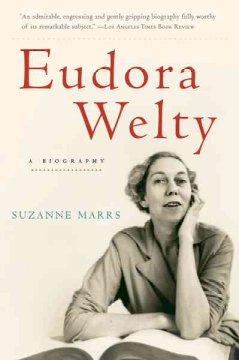
Eudora Welty: A Biography $16.95
New York, NY: Harvest Books. (2006)
Eudora Welty’s works are treasures of American litera-ture. When her first short-story collection was published in 1941, it heralded the arrival of a genuinely original writer who over the decades wrote hugely popular novels, novellas, essays, and a memoir. By the time she died in 2001, Welty had been given numerous literary awards and was all but shrouded in admiration. In this definitive account, Suzanne Marrs restores Welty’s story to human proportions, tracing Welty’s life from her roots in Jackson, Mississippi, to her rise to international stature. Making generous use of Welty’s correspondence, particularly with contemporaries and admirers including Katherine Anne Porter and E. M. Forster, Marrs has crafted a fitting and fascinating tribute to one of the finest writers of the twentieth century.
Eudora Welty: A Biography $150.00
New York: Harcourt (2005)
Signed by Suzanne Marrs, the biographer. Very good in white wrappers.
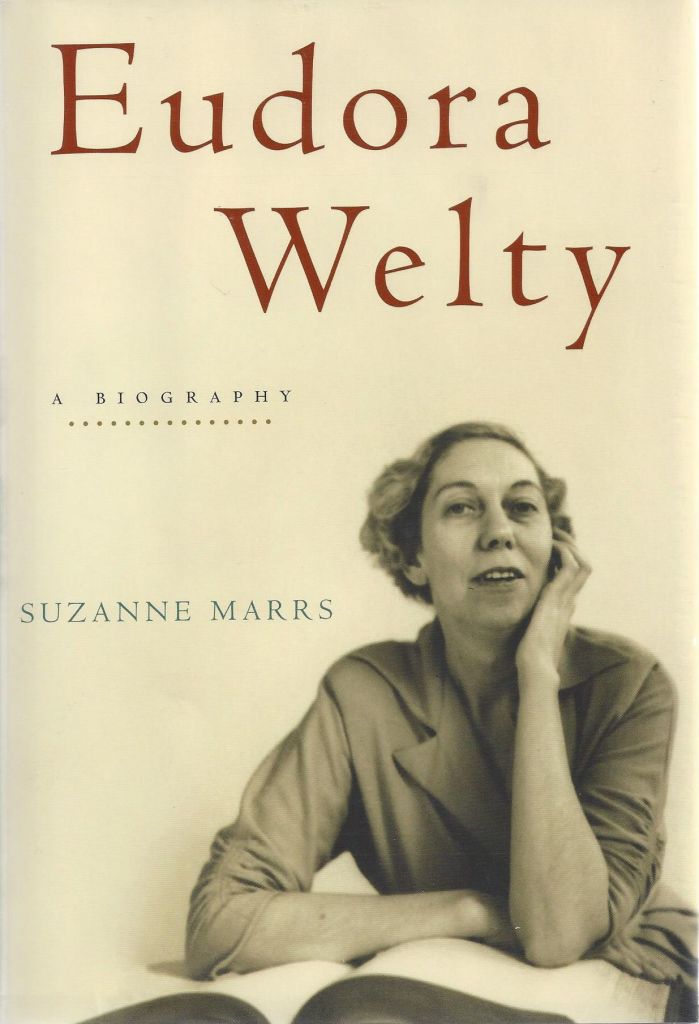
Eudora Welty: A Biography $35.00
New York: Harcourt (2005)
Signed by the biographer. Near fine in dust jacket
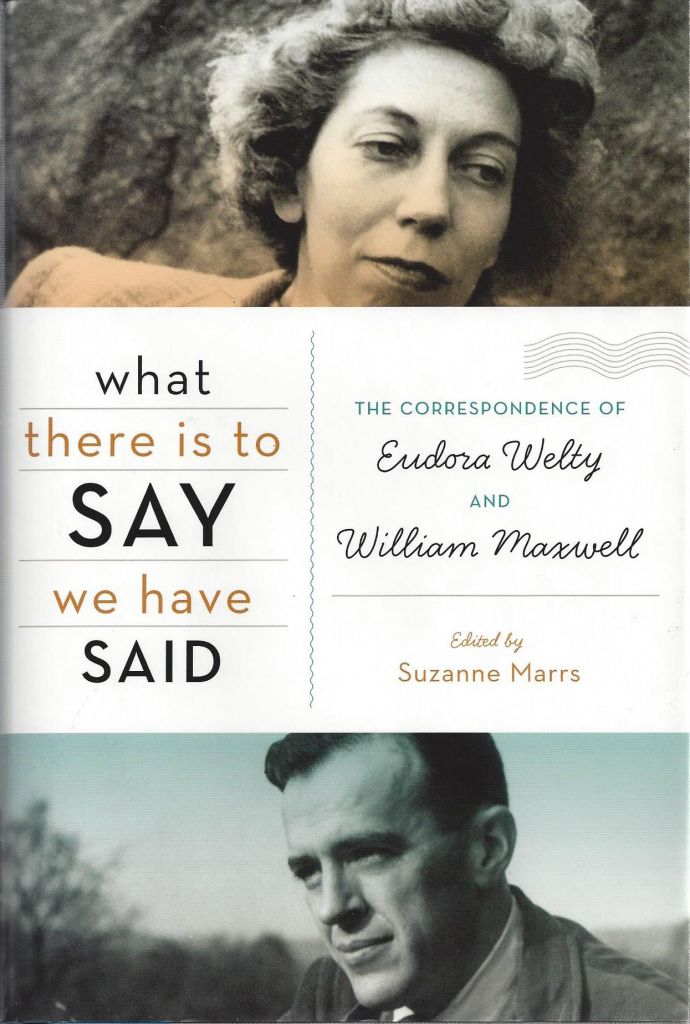
What There Is To Say We Have Said $35.00
New York, NY: Houghton Mifflin Harcourt (2011)
The Correspondence of Eudora Welty and William Maxwell
Signed by the editor Suzanne Marrs. Fine in dust jacket.
For more than 50 years, admired writers Eudora Welty and William Maxwell penned letters to each other. Living half a continent apart, their friendship was nourished and maintained by their correspondence. This edition bears witness to Welty and Maxwell’s editorial relationships–both in his capacity as “New Yorker” editor and in their collegial back-and-forth on their work.
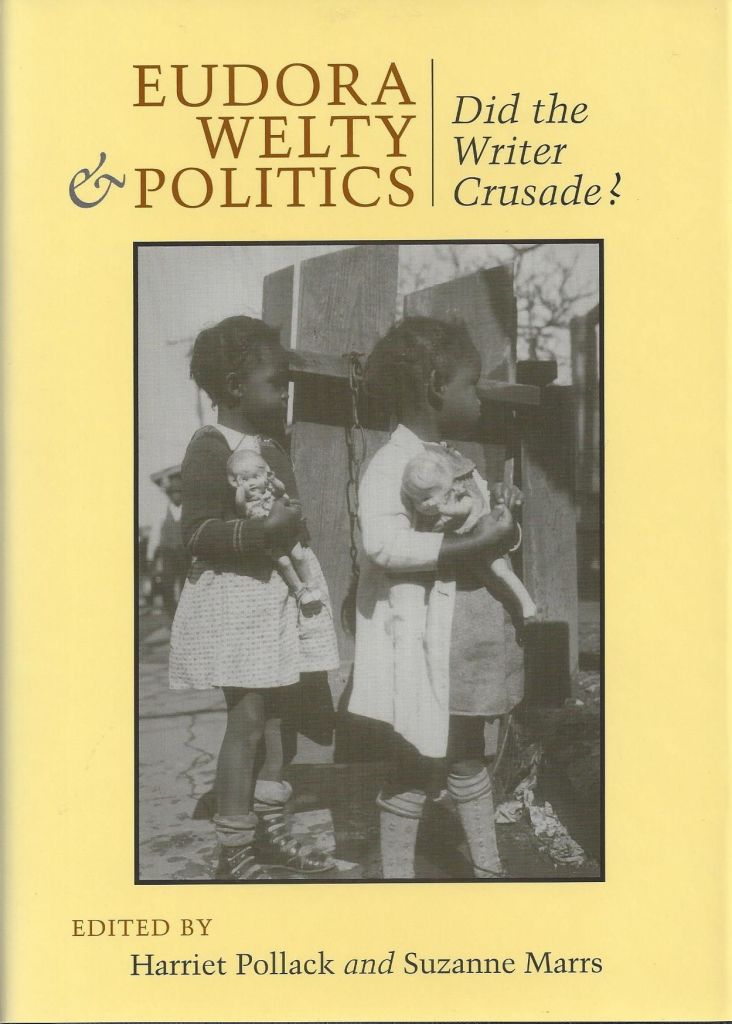
Eudora Welty and Politics $44.95
Baton Rouge, LA: Louisiana State University Press (2001)
Fine in dust jacket.
This collection of complementary and interrelated essays by ten well-known Welty critics brings welcome clarification to the controversial subject of Eudora Welty and the political, a topic once presumed to be closed tight. As the essays prove, Welty has been inaccurately assessed by critics from Diana Trilling in the Nation (1943) to Claudia Roth Pierpont in the New Yorker (1998) as a writer who avoids political, historical, or cultural engagement in her fiction. The better question these essayists explore is not whether but how Welty’s work is to be understood as political.
Harriet Pollack, Suzanne Marrs, Peggy Prenshaw, Noel Polk, Suzan Harrison, Ann Romines, Rebecca Mark, Barbara Ladd, Sharon Baris, and Daniele Pitavy-Souques place Welty’s seeming rejection of the political in her 1961 essay “Must the Novelist Crusade?” into the cultural and historical context of 1940-1960, when “individualism” was a code word for political and personal freedom and was defined in contrast to totalitarianism as represented by Mussolini, Hitler, and Stalin. Welty, they show, though she repudiated the concept of fiction as editorial, wrote stories that were inherently and unavoidably political.
The essayists look closely at how surprisingly often Welty’s fiction, criticism, and photographs are oblique responses to public political issues — political corruption, racial apartheid, poverty, McCarthyism and the Rosenberg trials, violent resistance to the civil rights movement, integration of schools, and filial piety and southern reverence for identities of the cultural past. The deceptive opposition of the terms private and political may be most at fault for misreading Welty.
As the only livingauthor to be reedited by the Library of America, Eudora Welty deserves a sound appreciation of her complex oeuvre. Eudora Welty and Politics provides just that, approaching Welty’s work from an all-new point of view to reveal how the writer repeatedly registered a political vision in her work.
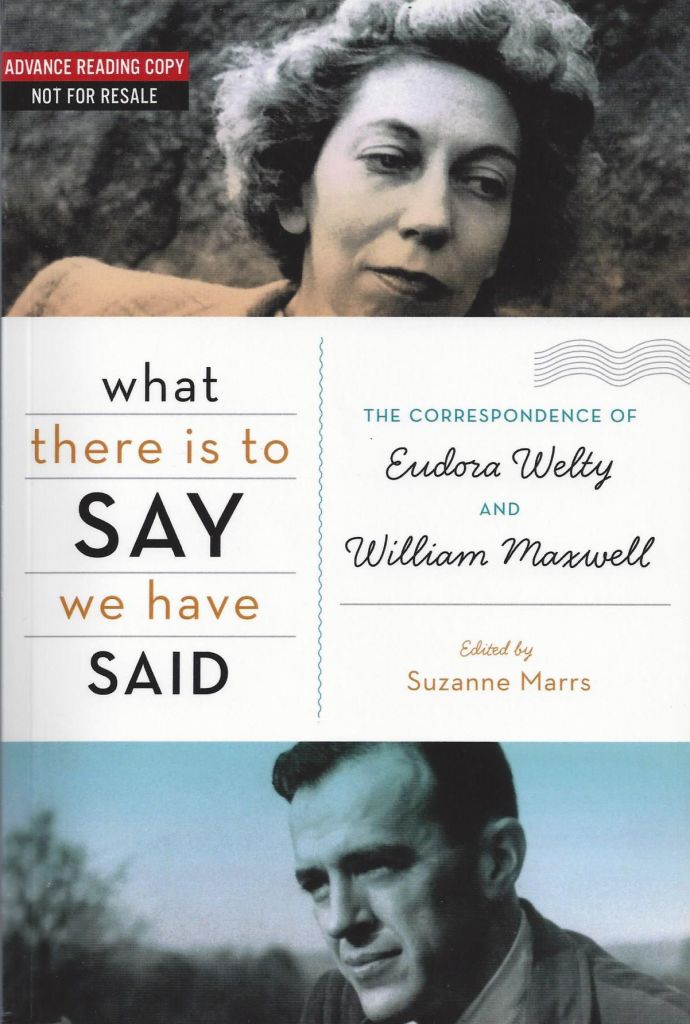
What There Is To Say We Have Said $50.00
Houghton Mifflin Harcourt (2011)
Signed by the editor, Suzanne Marrs
Fine in decorated wrappers.
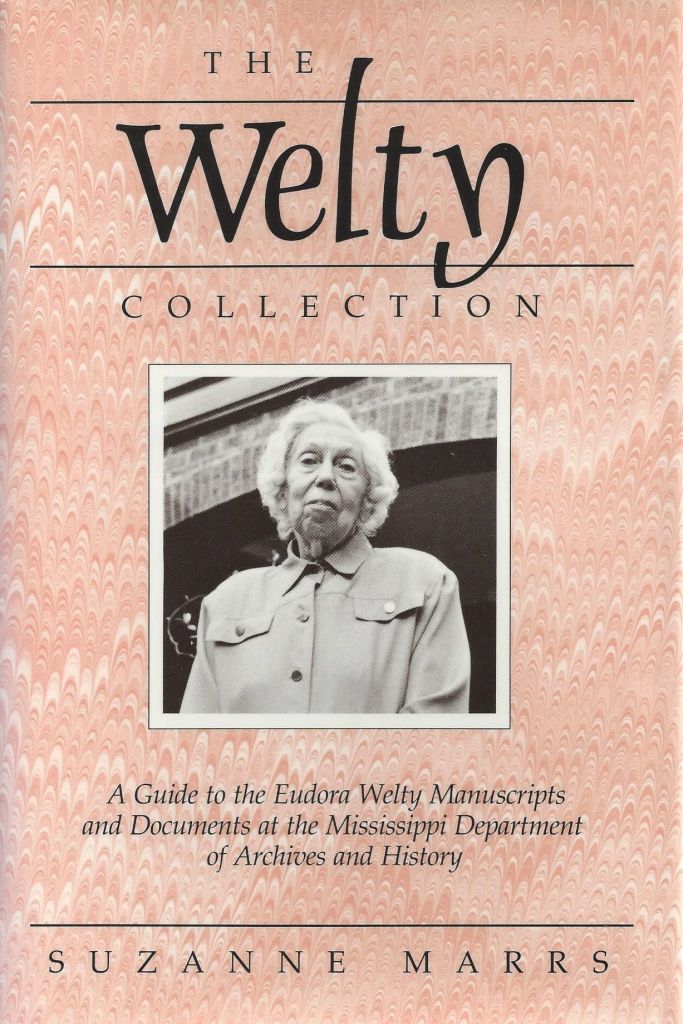
The Welty Collection $35.00
Jackson, MS: University of Mississippi Press (1988)
Signed by the editor Suzanne Marrs. Near fine in dust jacket.
This valuable & extensive guide is an annotated listing of all the materials in the Eudora Welty collection of the Mississippi Dept. of Archives & History. Almost all the materials in the collected were donated by Welty to her native state, including manuscripts, correspondence, & documentary photos. It is essential for those engaged in serious study of this acclaimed writer & her many stories & novels. The author has written 3 essays about holdings in the Collection & cataloged the papers in 5 sections. Also includes an unannotated listing of significant Welty manuscripts that are located at the Univ. of Texas & the Univ. of Virginia.